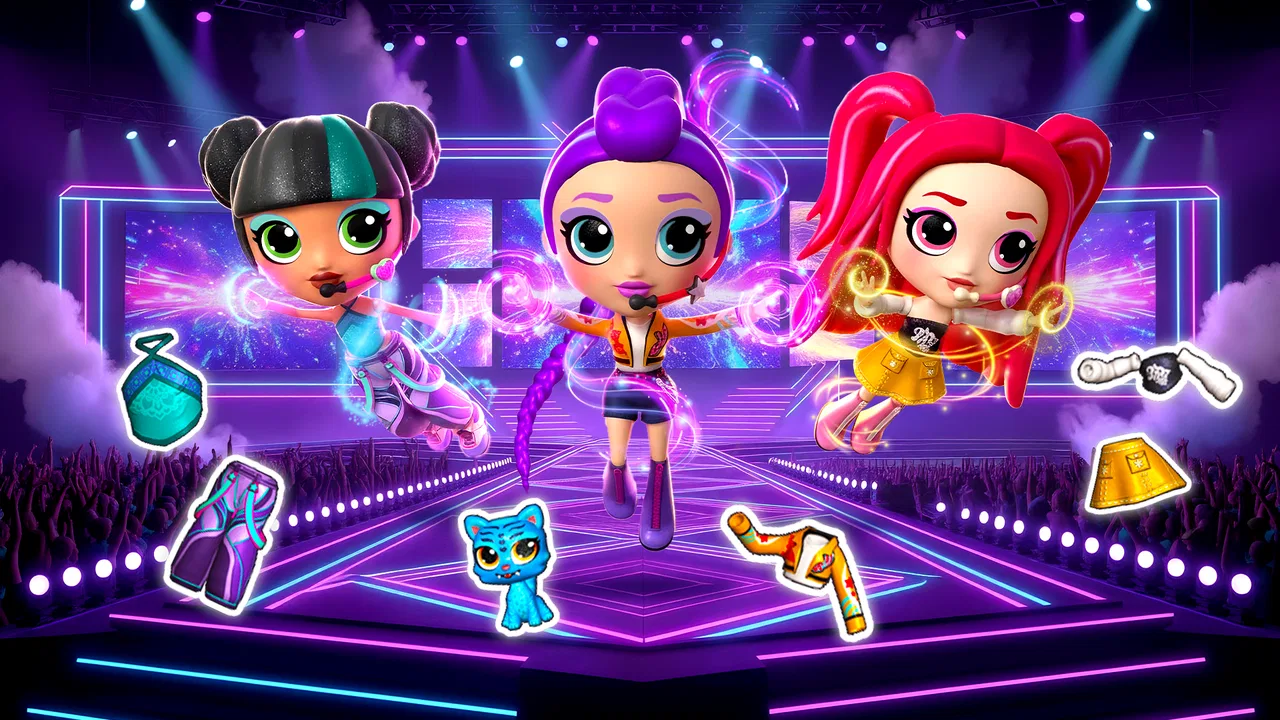
Go! Dolliz: Doll Dress-Up Game
- 4.6
- Rating
- 10.00M
- Installs
- Free
- Price

 Analysis by App-foxy
Go! Dolliz: Doll Dress-Up Game is the kind of simulation game I open when I want a creative break rather than a demanding challenge. Its focus is simple: create doll looks by mixing fashion, makeup, hairstyles, and themed outfits. The appeal comes from turning a blank character into something that feels personal, whether I am aiming for a polished princess, a wedding-ready style, or a look influenced by K-pop fashion.
What makes it worth considering is the low barrier to entry. I do not need experience with simulation games, and the Everyone content rating makes it approachable for younger players as well as adults who enjoy styling games. At the same time, the experience is not really about managing a city, building a business, or surviving a complex simulation. It is a visual dress-up activity built around choices, combinations, and the satisfaction of seeing a finished doll.
How the first few minutes establish the game
The early goal is immediately understandable: make a doll look the way I want. That clarity matters because fashion games can sometimes bury their main appeal under menus, currencies, or long tutorials. Here, the central activity is easy to grasp. I can think about the overall theme first, then coordinate clothing with hair, makeup, and accessories instead of choosing items randomly.
You May Also Like

 Blood Strike: 2.5 Anniversary
Blood Strike’s Loadouts Turn Every Drop Into a Tactical Gamble
A close look at Blood Strike’s custom loadouts: how fast access to signature weapons reshapes its battle royale rhythm, rewards preparation, and narrows the gap between fights.

 Pandora - Music & Podcasts
Pandora’s Music Is Easy to Start, but Harder to Recover
Pandora’s strength is its low-effort path from a seed to a station. Its weak spot is how much confidence it asks you to place in connection, setup, and quiet recovery.

 8 Ball Pool
 Is Built on Rivalries, Rematches, and Routine
A close look at the rivalries, rematches, shared routines, and unanswered safety questions that turn a quick pool match into a persistent mobile community.

 Samsung Music
’s Quiet Strength Is Playing What You Already Own
Its reach comes less from spectacle than from dependable access to a personal library. That simplicity is both the app’s strongest retention engine and its ceiling.

 AccuWeather: Weather Radar
AccuWeather Review: A Quick, Clear Forecast for Everyday Decisions
For everyday plans, the best forecast is the one you can understand quickly. AccuWeather makes rain timing, radar, and local conditions easy to act on, with a few trade-offs.

 Hill Climb Racing
Why Hill Climb Racing Still Turns Crashes Into One More Run
A tiny car, a bumpy hill and one more upgrade: Hill Climb Racing keeps resurfacing because its simple chaos makes every near-miss feel personal.
More From Our News Desk



I found the themed direction useful because it gives me a starting point when I do not have a specific idea. A princess look encourages a different silhouette and color mood from a wedding outfit, while a K-pop-inspired style suggests something more performance-ready and contemporary. These themes act as creative prompts, which is especially helpful for children or anyone who enjoys styling but does not want to design from an entirely empty canvas.
The first useful habit is to choose the occasion before selecting individual pieces. If I begin with one attractive item and build around it, the final outfit can feel mismatched. If I decide on the character’s role first, I make better choices about hair, makeup, and clothing. That small change turns the game from tapping through items into a light styling exercise.
The early experience also answers an important question for parents: is this a game a child can understand without constant help? In my view, the basic activity is accessible. The visual nature of dressing a doll is easier to follow than a game with complicated rules, and the age rating is Everyone. However, younger players may still need guidance around optional purchases, particularly if they are enthusiastic about collecting more fashion choices.
Where the creative loop works best
The strongest part of the loop is the combination of categories. Clothing alone can produce a recognizable outfit, but the look becomes more convincing when the hairstyle and makeup support the same idea. I get more value from treating each doll as a complete character rather than as a mannequin for a single dress.
For example, a wedding style benefits from restraint. I would start with the main outfit, choose hair that keeps attention on the face, and use makeup that supports a formal mood instead of adding every dramatic option available. A princess look gives me more room for exaggeration, while a K-pop-inspired outfit works better when the hair, makeup, and clothes feel energetic together. These are not complicated rules, but they make the results noticeably more intentional.
Another practical tip is to create a contrast deliberately. A soft hairstyle with a bolder outfit, or a glamorous dress paired with simpler makeup, can make the character more memorable than matching every element at the same intensity. This is where the game has more creative depth than its straightforward premise might suggest.
The game is developed by Dramaton and is available free of charge. That makes it easy to try without committing money at the start. The trade-off is that optional in-app purchases range from $0.99 to $26.99 per item. I would approach the game as a free styling experience first and decide later whether additional purchases genuinely improve my enjoyment.
Progress feels visual rather than technical
In a traditional simulation game, progress may be shown through money, levels, buildings, or increasingly complex tasks. Go! Dolliz communicates progress more through the looks I create and the range of themes I can explore. The reward is often visual: I finish a character and can judge whether the outfit feels coherent, attractive, funny, dramatic, or completely different from my previous attempt.
That kind of progress is immediate, but it is also personal. One player may care about creating elegant formal outfits, while another may prefer colorful combinations that would never work in a real wardrobe. The game does not need to tell me that one style is correct for the creative process to be satisfying.
The challenge, therefore, is not mainly about reflexes or complicated strategy. It is about making decisions from a collection of visual options and learning what works together. I gradually become more selective. Instead of choosing the first item I like, I compare the mood of the entire outfit and ask whether the accessories, hair, and makeup are helping or distracting.
This is also why the game may appeal to children who enjoy character creation. It offers a safe-feeling space for experimenting with appearance without the pressure of getting a real-world outfit right. Adults can enjoy the same loop as a short relaxation activity, although anyone looking for a deep simulation economy or a long narrative campaign will probably find the progression lightweight.
The game has a 4.7 average from around 116 thousand ratings, which suggests that its accessible styling concept connects with a large audience. It has also passed 10 million installs, so this is not an obscure experiment with a tiny player base. Those figures do not change the personal nature of the experience, but they do make it easier to see the game as an established option in the dress-up simulation space.
How the difficulty curve behaves
The difficulty curve is gentle because the main task is creative rather than punitive. There is no need to master fast controls or memorize complicated systems before I can enjoy the game. The first outfit can be satisfying even when I am still learning which combinations suit each theme.
That gentleness is a strength for casual players, but it can also become a limitation. If I want increasingly demanding objectives, strict scoring, or a clear competitive ladder, the game may not provide enough pressure. Its challenge depends on how seriously I set my own styling goals. I can try to create a more balanced outfit, work within a theme, or deliberately make contrasting looks, but the motivation comes from my imagination more than from difficult rules.
I think the best way to keep the experience interesting is to impose small personal challenges. I might create a wedding look using one dominant color, style a princess without relying on the most obvious glamorous choices, or build a K-pop-inspired character where the hair is the visual centerpiece. These restrictions make each session more purposeful without turning the game into a stressful task.
A second useful approach is to compare two versions of the same character. I can make one outfit that is highly coordinated and another that is intentionally experimental, then decide which one communicates a stronger personality. This gives the game a before-and-after rhythm and helps me notice how much a hairstyle or makeup choice changes the entire presentation.
The lack of a steep difficulty curve means the game is suitable for short sessions. I can play while taking a break, finish a look, and stop without feeling that I have abandoned a complicated objective. That is a better fit for a mobile dress-up game than forcing every player through increasingly demanding stages simply to maintain momentum.
Unlocks, spending, and the point where pacing slows
Free access is a meaningful advantage because I can test the core styling loop before deciding whether it deserves a place on my phone. The main question is not whether the game can be started without payment, but whether I remain comfortable with the pace of available choices as I continue playing.
Fashion games naturally encourage collecting. Once I have created a few looks, I may want more variety so that outfits do not begin to feel similar. That is where optional purchases can create pressure. The listed purchase range begins at $0.99 and reaches $26.99 per item, so the difference between a small impulse buy and a much larger commitment is significant. I would recommend setting a personal spending limit before browsing tempting additions.
For a child, this is the point where adult supervision becomes practical rather than merely cautious. The game is rated Everyone, but an age rating does not remove the need to discuss purchases. A child may understand the styling activity perfectly while still not recognizing that repeated small decisions can add up. Keeping the game as a creative tool instead of treating every new item as necessary helps preserve its value.
For me, the best retention comes from returning with a new theme in mind, not from feeling forced to keep up. If I play only to obtain more items, the loop can start to feel repetitive. If I play to solve a styling problem or create a character with a particular personality, the same categories remain more interesting for longer.
This is an important distinction from collection-heavy alternatives. Some dress-up games lean heavily on timed events, competitive rankings, or elaborate reward schedules. Those systems can provide stronger external motivation, but they may also make the experience feel like a checklist. Go! Dolliz is better suited to players who want direct creative control and a relaxed pace than to players who need constant goals pushed in front of them.
Everyday use: a short creative reset
A realistic use case is a ten-minute break between ordinary tasks. I can open the game, choose a wedding or princess direction, build one complete look, and stop once the character feels finished. There is no need to prepare a long session or remember a complicated storyline. That makes it easy to fit into a commute, a quiet moment at home, or a pause after studying.
It also works as a shared activity. A parent and child can take turns choosing the theme, outfit, hairstyle, and makeup, then explain why each choice fits. Friends can create contrasting versions of the same idea, such as a classic wedding look versus a more dramatic one. The game becomes more engaging when the styling decisions are discussed instead of made silently.
One less obvious benefit is that the app can help players practice visual coordination in a low-stakes way. It encourages attention to color, proportion, mood, and balance. That does not make it a formal design tool, but it does give the player a reason to think about why an outfit works. I noticed that the most successful results usually came from editing rather than adding: removing one distracting element often improved the character more than adding another accessory.
Another trade-off is that this freedom may feel limited to players who want a story to give every outfit a purpose. A narrative game can make clothing part of a larger adventure, while this experience keeps the focus on the doll itself. If I want emotional characters, dialogue, exploration, or a strong sense of consequence, I would choose a different type of simulation or life game.
Who will enjoy it, and who should skip it
I would recommend Go! Dolliz to players who enjoy dress-up games, visual customization, and fashion themes that range from glamorous to playful. It is particularly suitable for someone who wants an uncomplicated creative activity, a child interested in styling characters, or an adult looking for a relaxing mobile game rather than a demanding challenge.
It is also a good match for players who like making several versions of a character. The pleasure is in trying a new direction, noticing how one category changes another, and deciding when the look is complete. If that kind of self-directed play sounds satisfying, the free starting point makes trying it reasonable.
I would skip it if my priority were deep simulation mechanics, resource management, competitive scoring, or a substantial narrative. I would also be cautious if I dislike games that can make additional fashion content tempting through optional purchases. In that situation, a paid dress-up alternative with a clearly defined content package may feel more comfortable, even if it offers fewer themes.
Players using older devices should note that the minimum operating system is Android 7.0 or later. The current version is 5.70, so keeping the app updated is sensible when possible, especially if the game behaves differently after the operating system or device software changes.
My verdict on goals, pacing, and long-term appeal
Go! Dolliz succeeds because it understands its own scale. It does not need a complicated premise to make styling enjoyable. The early goals are clear, the progress is visible in the characters I create, and the difficulty remains gentle enough for casual play. Its strongest retention tool is the desire to try another theme or improve the balance of the previous outfit.
The weakness is equally clear: self-directed creativity will not motivate everyone indefinitely. Without a personal challenge, the loop can become familiar, and players who depend on demanding objectives may feel that the pacing is too soft. Optional purchases can also affect the sense of progression if I start judging the experience by how many fashion choices I own instead of what I can create with the choices already available.
My advice is to begin with a specific styling idea and treat the app as a creative sandbox, not as a race to collect everything. Try a coordinated look, then deliberately break one rule. Compare a simple outfit with a highly decorated one. If both approaches remain fun, the game has enough flexibility to become a pleasant repeat-play option.
After reviewing it as a simulation game, I see it as a strong casual recommendation rather than a deep long-term strategy experience. Dramaton has built an approachable fashion playground with K-pop, wedding, princess, makeup, and hair directions that give new players useful starting points. The best reason to play is the freedom to make a doll feel like your own creation, not the promise of increasingly difficult gameplay.
For me, that is enough to recommend it to the right person. The free entry point, Everyone rating, and straightforward styling loop make it easy to share with a family member or use during a short break. Just keep expectations realistic, watch optional spending, and choose it for creative experimentation rather than complex progression. In that role, Go! Dolliz: Doll Dress-Up Game is an enjoyable, accessible choice.
FAQs for Go! Dolliz: Doll Dress-Up Game
01What is the main objective of Go! Dolliz: Doll Dress-Up Game?
The main objective of Go! Dolliz: Doll Dress-Up Game is to provide an engaging and creative platform where players can customize and dress up virtual dolls. Users have access to a wide range of fashion items, accessories, and makeup options to style their dolls uniquely. The game encourages creativity and expression, appealing to fashion enthusiasts and casual gamers alike.
02Is Go! Dolliz: Doll Dress-Up Game free to play, and are there in-app purchases?
Yes, Go! Dolliz: Doll Dress-Up Game is free to download and play. However, like many mobile games, it includes in-app purchases. These purchases might offer exclusive fashion items, cosmetics, or other premium content. While the game is enjoyable without spending money, purchasing can enhance the experience by unlocking additional customization options.
03What age group is Go! Dolliz: Doll Dress-Up Game suitable for?
Go! Dolliz: Doll Dress-Up Game is designed for players of all ages, but it particularly appeals to children and teenagers who enjoy fashion and creativity. The game's interface and mechanics are easy to understand, making it accessible even to younger players. Parental guidance is advised for in-app purchases to prevent unintended spending.
04Does Go! Dolliz: Doll Dress-Up Game require an internet connection?
Go! Dolliz: Doll Dress-Up Game can be played offline, which is great for users who want to enjoy the game without an active internet connection. However, certain features, such as accessing the latest fashion items or participating in online events, may require internet connectivity to function properly.
05Are there any social features in Go! Dolliz: Doll Dress-Up Game?
Yes, Go! Dolliz: Doll Dress-Up Game includes social features that allow players to share their styled dolls with friends or on social media platforms. Players can also participate in fashion contests and events, where they can showcase their creativity and compete with others. These social elements enhance the game's community aspect and provide opportunities for interaction.
Pros
- Wide variety of outfits and accessories.
- Intuitive and user-friendly interface.
- Regular updates with new content.
- Great graphics and animations.
- No intrusive ads during gameplay.
Cons
- Limited free items available.
- In-app purchases can be pricey.
- Requires internet connection.
- Occasional lag on older devices.
- Customization options can be overwhelming.

Go! Dolliz: Doll Dress-Up Game
Gallery